


Why the Rotisserie Chicken Is the Last Honest Thing in the Grocery Store
Grocery stores are not shops anymore. They are brightly lit casinos for people who need toilet paper and somehow leave with peach salsa, rosemary crackers, and a seventeen-dollar candle called Coastal Memory.
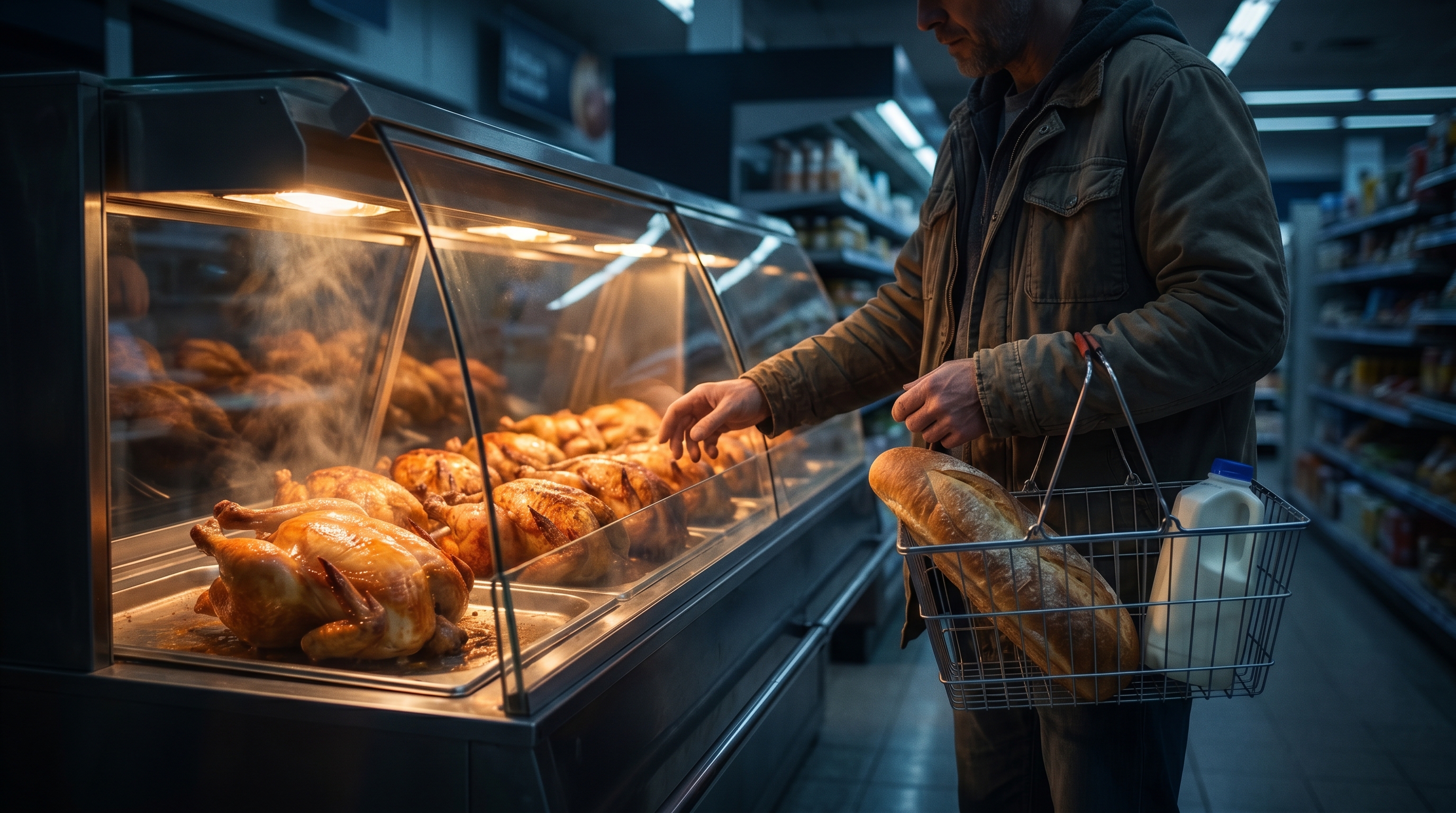
And in the middle of this fluorescent scam sits the rotisserie chicken: hot, fragrant, glistening like a saint who survived accounting. It is the last honest deal in the building.
Not the cheapest thing.
The best deal.
That’s different, and if you don’t understand the difference, you’ve probably spent $11 on a sad turkey sandwich and called it “convenient.” Sit down. We need to talk.
It’s Not a Chicken. It’s a Bailout Package.
A grocery store rotisserie chicken solves at least four adult problems at once.
You’re hungry. You’re tired. You’re cheap. You’re one unanswered email away from eating dry cereal over the sink like a raccoon in athleisure.
The chicken sees you.
For the price of one mediocre fast-food combo, you get hot protein, actual flavor, and the illusion that your life has structure. That bird says, “No worries, sweetheart, we can make this look intentional.”
Listen. Raw whole chickens can be a great value too. I’m not arguing with arithmetic. I’m arguing with reality.
Reality is this: a raw chicken still demands labor. You have to season it, roast it, temp it, rest it, carve it, and clean up after it like it just hosted a fraternity party in your oven. The rotisserie chicken has already done the hard time.
Someone else seasoned that beast.
Someone else rotated it under heat until the skin tightened and bronze-polished itself into that salty, peppery, paprika-kissed jacket of glory.
Someone else washed the pan.
That matters.
The greatest food deal in history is not about the lowest number on a price tag. It’s about value after human suffering is deducted.
And rotisserie chicken has almost no suffering left attached to it except the little elastic truss thing, which always feels weirdly medical.
The Smell Alone Is Psychological Warfare
You know why they put rotisserie chickens near the front or along a major path in the store?
Because they are not selling chicken. They are weaponizing aroma.
That smell drifts through produce and frozen foods like a smoky little trumpet solo, whispering, “You do not need to spiral tonight. You can simply eat.” It cuts through decision fatigue with the elegance of a cleaver through parsley.
This is important because the modern grocery store is built to destroy your will.
Thirty-two kinds of yogurt. Seventeen mustards. Crackers made from ancient grains harvested by apologetic men in wide-brim hats. You came in for onions and now you’re reading the emotional backstory of bone broth.
Then the rotisserie chicken arrives like a leather-jacketed divorce lawyer and says, “Enough. Dinner is handled.”
That kind of certainty has value.
Frankly, most people don’t need more options. They need one correct answer.
The rotisserie chicken is the correct answer.
The Skin Is for Sinners and the Meat Is for Strategy
Let me say something tender now.
A good rotisserie chicken, fresh out of the case, is one of the great minor pleasures of ordinary life. Not wedding-day joy. Not fireworks joy. Better.
Tuesday joy.
The skin is salty and taut and a little sticky with rendered fat and spice, the kind of thing you tear off with your fingers while standing at the counter pretending you’re “just plating.” Liar. You’re gremlin-feeding, and I support you.
Underneath, the breast meat is usually juicy enough, the thighs are where the real party lives, and the wings are tiny little bonuses for people who know how to work for love.
This is where the rotisserie chicken becomes not merely dinner but infrastructure.
Eat some hot, immediately.
Then strip the rest while it’s still slightly warm. Pull breast meat in chunks for sandwiches and salads. Shred thigh meat for tacos, enchiladas, quesadillas, fried rice, noodle bowls, chicken salad, pot pie, soup, or a disgusting-beautiful midnight melt with sharp cheddar and too much black pepper.
Do not hack at it tomorrow when it’s cold and rubbery and acting like it pays rent.
Break it down early.
Use your hands.
Hands are God’s tongs.
You’re Not Lazy. You’re Allocating Resources Like a War General.
People love to act weirdly moral about convenience food.
If you buy pre-cut vegetables, prepared sauce, or rotisserie chicken, some goon with a sourdough starter will act like you’ve betrayed agriculture. Relax, Ezekiel. Nobody’s getting a medal for exhausting themselves over onions on a Wednesday.
The point of cooking at home is not to perform rustic suffering.
The point is to feed yourself well.
If a seven-dollar chicken helps you make three meals, avoid takeout, and keep your blood sugar from turning your personality into a hostage situation, that is not laziness. That is operational brilliance.
You know what’s lazy?
Paying $24 plus fees for lukewarm chicken fingers because you were too proud to grab the bird sitting ten feet from the bananas.
That’s not standards.
That’s self-sabotage wearing nice shoes.
And yes, some rotisserie chickens are aggressively seasoned. Some are a little saline. Some are plumped up enough to make you raise an eyebrow. Fine. We live in a fallen world.
But even then, most of them still outperform a shocking amount of restaurant chicken, especially the boneless skinless sadness so many places serve like they’re punishing you for ordering protein.
Off the Rails for a Second: The Rotisserie Chicken Is Basically a Civic Institution
Stay with me.
There are a few things holding society together by a greasy thread: municipal water pressure, pharmacists, grandmothers with folding carts, and the grocery store rotisserie chicken.
That chicken is there for new parents who haven’t slept.
For college kids with one pan and a dream made of rent anxiety.
For office workers who forgot to thaw anything and now have the thousand-yard stare of a man googling “is hummus enough for dinner.”
For old guys in windbreakers buying one chicken, one loaf of bread, and exactly zero nonsense because they know things we don’t.
Civilization is not built by philosophers.
It is built by people who can turn one hot chicken into dinner, tomorrow’s lunch, and stock by Thursday.
Rome didn’t fall because of rotisserie chicken. If anything, it fell because nobody had one handy.
Now, before a historian throws a chair: yes, I know that’s not the reason. But emotionally? It feels correct.
And emotion is the secret broth of all food decisions.
How to Actually Use the Damn Thing Like a Professional Opportunist
Here’s where people fumble the bag.
They buy the chicken, eat two random hunks, put the rest in the fridge in its sweaty plastic coffin, and then discover it three days later looking haunted.
No.
When you get home, do this.
Pull off the legs and thighs. Slice or shred the breast. Remove the wings if you haven’t already inhaled them in the car like a private little animal. Separate light and dark meat if you want to feel organized.
Then make a plan.
Night one: hot chicken with something easy like bagged salad, rice, roasted potatoes, or torn bread with butter. This is not the time to prove anything.
Night two: tacos. Warm the shredded meat in a skillet with a splash of chicken stock or water, a little cumin, chili powder, smoked paprika, and a squeeze of lime. Don’t nuke it dry like an office microwave war crime.
Night three: chicken salad. Mayo, Dijon, celery, lemon, black pepper, maybe tarragon if you’re feeling flirtatious.
Or soup. God, soup.
If the bird came with bones, skin, and all the weird little scraps people ignore because they lack vision, throw those into a pot with onion, carrot, celery, garlic, parsley stems, peppercorns, and a bay leaf. Cover with water and simmer gently for a couple hours.
Not a violent boil.
You’re making stock, not interrogating it.
Strain it, salt it properly, and suddenly the “cheap grocery chicken” has become a luxury item with a second act. That’s not thrift. That’s seduction.
The Bird Has Limits, and We Should Respect Them
I am not saying rotisserie chicken is perfect.
Sometimes the breast is overcooked. Sometimes the skin goes soft in the container. Sometimes the seasoning profile tastes like a committee designed it in a carpeted room.
And no, it will not replace a properly roasted chicken you make at home, where you dry-brine the bird, let the skin dehydrate uncovered overnight, roast it hot, and pull it at the exact right temperature so the juices stay where they belong instead of fleeing like interns at 5:01.
A great homemade roast chicken is a love letter.
A rotisserie chicken is a competent emergency contact.
Know the difference.
But also know this: most weeknights do not require love letters. They require competence, warmth, and enough leftovers to keep tomorrow from becoming expensive.
That is where the supermarket bird absolutely kicks the door in.
Why This Cheap Chicken Feels Weirdly Comforting
Maybe this is the real reason people love it.
The rotisserie chicken is not aspirational food. It does not ask you to become a better person. It doesn’t need artisanal vocabulary or a reclaimed-wood backstory.
It is just there.
Hot. Ready. Reasonable.
In a world full of subscriptions, hidden fees, performative luxury, and tomatoes that taste like damp envelopes, that kind of reliability hits hard.
Food does not always need to be transcendent.
Sometimes it just needs to catch you before you fall into the terrible ideas portion of the evening.
A rotisserie chicken can do that.
It can turn one exhausted grocery trip into dinner. It can stretch across days. It can feed one person without making solitude feel bleak, or feed a family without making the cook feel like a martyr in an apron.
That’s not just value.
That’s mercy.
And maybe the greatest deal in food history isn’t about cost at all. Maybe it’s about being handed something warm and useful at exactly the moment you were running out of patience.
That bird, ridiculous little plastic dome and all, is proof that convenience and comfort don’t have to be stupid.
Sometimes the smartest thing in the room is a chicken turning slowly under a heat lamp, smelling like dinner and rescue at the same time.