



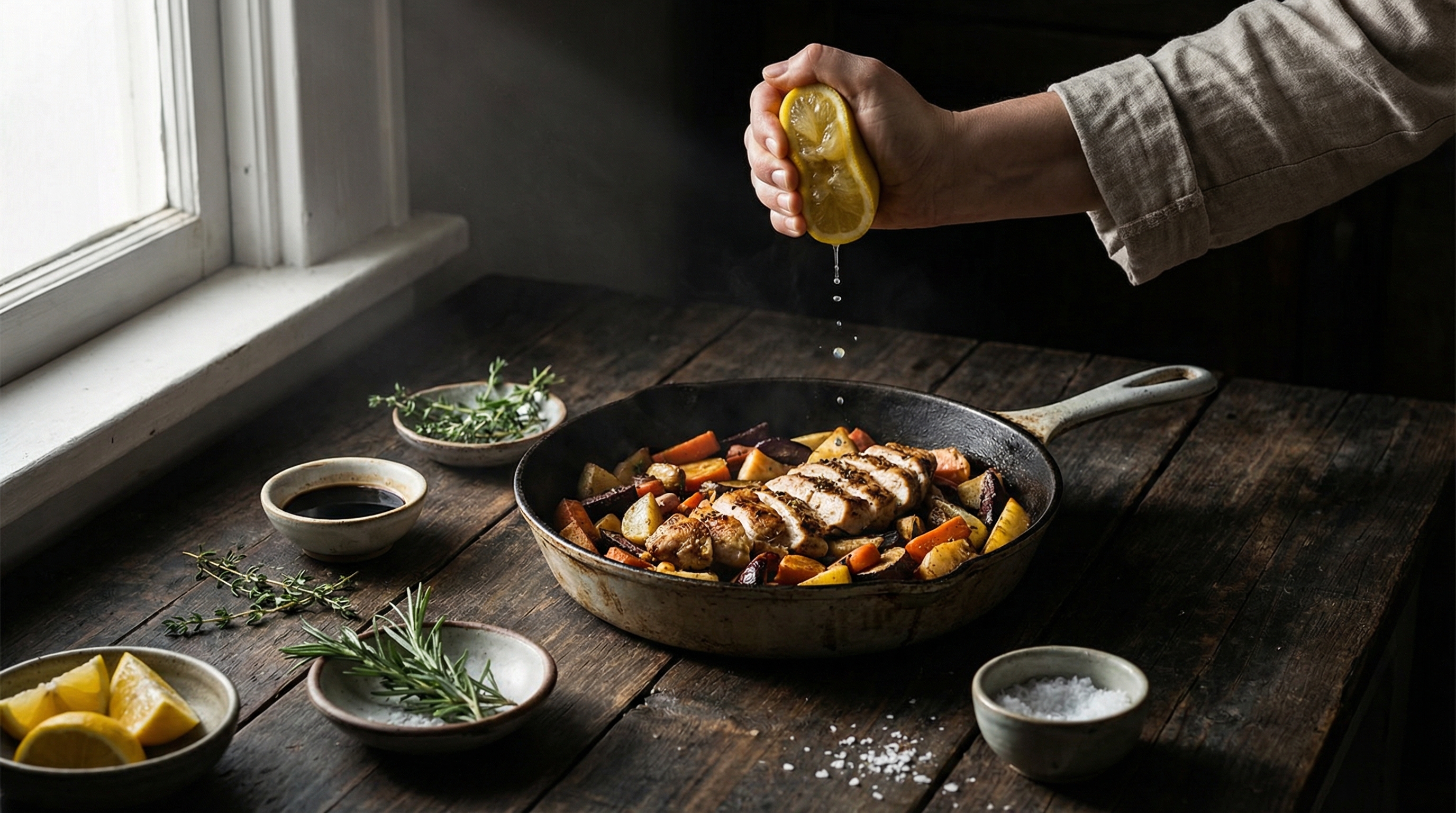
Why Your Food Is Bland: Acid Is the One Thing You’re Probably Missing
I’m going to say something that may rattle your spice rack right off the wall: your food is probably not bland because it needs more seasoning.
It’s bland because it’s flat.
And the one thing that fixes flat food — the thing people ignore while they’re out here committing paprika cosplay — is acid.
Not battery acid, you lunatic. Lemon juice. Vinegar. Tomatoes. Yogurt. A splash of pickle brine if you’ve got the soul of a raccoon and the instincts of a genius.
Listen. Salt makes food louder. Acid makes it awake.
Those are not the same job.
You can dump smoked paprika, garlic powder, onion powder, cayenne, cumin, coriander, and the ashes of your self-respect into a pot, but if there’s no acid, a lot of food still tastes like a couch cushion in a sweater. Heavy. Muted. Sad in a beige way.
Acid is the bright light in the interrogation room. It gets the truth out of your ingredients.
Bland Isn’t Boring — It’s Usually Unbalanced
Most home cooks think bland means “needs more salt.” Sometimes that’s true.
A lot of the time, though, the food is already salted enough. Add more and now it’s just aggressively dull. Like a motivational speaker with halitosis.
What’s actually happening is this: fat, starch, protein, and sweetness are piling up in the pan like drunk uncles at a wedding buffet. Butter. Cheese. Cream. Potatoes. Pasta. Roasted meat. Beans. Rice. All beautiful. All capable of becoming one giant muddy shrug if nothing cuts through them.
That cutting-through is acid.
A squeeze of lemon on roasted broccoli doesn’t make it taste like lemon. It makes it taste more like broccoli, only now broccoli has posture.
A teaspoon of vinegar in soup doesn’t make it “vinegary” unless you pour like a maniac. It sharpens edges. It pulls flavors apart so your tongue can actually identify them instead of receiving one long wet handshake.
Tomatoes in a braise, yogurt in a marinade, buttermilk in mashed potatoes, tamarind in a sauce, white wine in a pan reduction, sumac over grilled chicken — all of that is acid doing what acid does best: making the whole dish less sleepy.
If salt is volume, acid is contrast.
And contrast is where flavor lives.
The Tiny Splash That Saves Dinner
Here’s the brutal little tragedy of home cooking: people spend an hour making a stew, curry, pasta sauce, or pan of sautéed vegetables, taste it, and say, “Hmm. It needs something.”
Yes. It does.
That “something” is very often one teaspoon of acid added at the end.
Not in the beginning, where it can cook off into the wallpaper. At the end. When you can taste what it’s doing.
This is the move. This is the secret handshake. This is the difference between “pretty good” and “who the hell made this?”
Try it with:
- chicken soup: a squeeze of lemon
- beef stew: a splash of red wine vinegar or sherry vinegar
- mac and cheese: a tiny dab of mustard or a few drops of hot sauce
- tomato sauce: a touch of balsamic or red wine vinegar if it tastes muddy
- roasted vegetables: lemon juice or sherry vinegar after roasting
- fried food: lemon wedge, always, because fried food without acid is just grease wearing a tuxedo
- beans: cider vinegar, lime juice, or chopped tomatoes
- rich meat dishes: pickles, chutneys, relishes, gastriques, anything with bite
Do not dump blindly.
This isn’t a baptism. It’s a correction.
Add a little. Stir. Taste. Repeat if needed.
You want brightness, not a mugging.
The Difference Between Salt and Acid, Since Apparently We Need to Talk About It
Salt gets inside food and amplifies flavor. Acid sits on top and around it, making flavor feel clearer, cleaner, more vivid.
Salt says, “Speak up.”
Acid says, “Stand over there where I can see you.”
That’s why a dish can be perfectly salted and still taste dead. The flavors are there, but they’re lying on the couch in sweatpants scrolling through their own decline.
Acid puts shoes on the meal.
Think about foods everyone loses their minds over.
Tacos with lime.
Fish and chips with malt vinegar.
Schnitzel with lemon.
Rich curries with yogurt, tamarind, or lime.
Barbecue with pickle and slaw.
Salad dressing that actually wakes up the leaves instead of oiling them like gym equipment.
This is not coincidence. This is structural. These foods work because somebody, somewhere, had the decency to include brightness.
And before you ask, no, black pepper is not acid. Pepper is pepper. Stop trying to make it do other jobs. That’s how resentment starts.
Your “Off-Rails” Intermission: The Casino Carpet Theory of Flavor
Have you ever looked at casino carpet?
Absolutely unhinged stuff. Swirls. Zigzags. Colors that seem chosen by a panel of escaped parrots. It’s designed to keep you awake, alert, slightly confused, and unable to tell time. A visual slap in the face.
Now imagine a casino carpet in beige. Same pattern. Same room. No contrast. You’d fall asleep into a slot machine and wake up married to a man named Doug.
That, my friend, is your bland dinner.
Flavor without acid is beige casino carpet.
The ingredients might be expensive. The technique might be decent. The chicken may even be cooked properly for once, which frankly is progress. But without contrast, your mouth gets bored. And a bored mouth is cruel. It starts saying things like, “Maybe it needs more cheese,” when what it really needs is one violent squeeze of citrus.
See? Off the rails, and yet we have arrived exactly where we needed to go.
How to Actually Use Acid Without Ruining Everything
People get nervous about acid because they treat it like a jump scare.
Relax.
You are not trying to make everything sour. You are trying to make things taste complete.
Here’s how to use the big players.
Lemon and lime
Use when you want freshness and obvious brightness.
Best on seafood, chicken, vegetables, herbs, grain bowls, soups, dressings, and anything Mediterranean, Middle Eastern, Mexican, or generally alive.
Add juice at the end. Add zest earlier if you want fragrance without extra tartness.
And for the love of all that sizzles, don’t blast bottled lemon juice onto a delicate dish unless desperation has moved in and started paying rent.
Vinegar
This is the grown-up weapon.
Different vinegars do different jobs:
- red wine vinegar: sharp, great in tomato sauces, beans, dressings
- white wine vinegar: cleaner, good in lighter sauces and chicken dishes
- sherry vinegar: nutty, sexy, fantastic on roasted vegetables and pan sauces
- apple cider vinegar: fruity and punchy, great in slaws, beans, braises
- balsamic: sweet and deep, use carefully or it starts acting like it owns the place
- rice vinegar: mild and gentle, ideal for quick pickles, dressings, and Asian-style sauces
- malt vinegar: best friend of fried potatoes and pub food degenerates
Start with 1/2 teaspoon to 1 teaspoon in a family-size dish. Taste. You can always add more. You can’t un-vinegar a disaster.
Tomatoes, yogurt, wine, and fermented things
These are stealth acid.
Tomatoes bring sweetness and acidity. Yogurt adds tang and tenderness, especially in marinades and sauces. Wine gives acidity plus complexity if you cook it down properly. Kimchi, sauerkraut, capers, olives, and pickles bring acid with attitude.
These ingredients don’t just season food. They interrupt richness in the best possible way.
Sometimes dinner doesn’t need another ingredient.
Sometimes it needs a heckler.
The Dishes That Practically Beg for Acid
Some foods are acid-needy by design.
If you make these without brightness, you’re building a luxury sedan and forgetting the steering wheel.
Rich pasta dishes
Alfredo. Carbonara-adjacent situations. Creamy mushroom pasta. Mac and cheese.
These need black pepper, yes. They often need salt, yes. But they also benefit from lemon zest, a little lemon juice, a splash of white wine in the mushrooms, or a few drops of hot sauce or mustard folded in.
Not enough to announce itself. Just enough to stop the sauce from feeling like an expensive bathrobe.
Soups and stews
Especially bean soups, lentils, chicken soup, beef stew, and pureed vegetable soups.
A teaspoon of vinegar or squeeze of citrus added after cooking can wake up an entire pot like smelling salts for dinner.
Roasted vegetables
Roasting gives sweetness and depth. Beautiful.
But if you roast carrots, cauliflower, Brussels sprouts, broccoli, or squash and stop there, you’ve only done half the dance. Finish with lemon juice, pomegranate molasses, vinaigrette, yogurt sauce, feta, sumac, or even a little pickled onion.
That’s when roasted vegetables go from “responsible choice” to “feral plate-licking event.”
Meat and fried food
Fat loves acid the way gossip loves a small town.
Roast chicken with lemon. Pork with apple cider vinegar or mustard. Lamb with yogurt or sumac. Fried cutlets with lemon wedges. Barbecue with pickles and slaw.
This is ancient human wisdom. Ignore it at your peril.
The Most Common Mistake: Adding Acid Too Late, Too Early, or Like a Sociopath
Yes, I know that sounds contradictory. Welcome to cooking.
If you add all your acid at the beginning of a long cook, it can mellow so much that the final dish still tastes flat. If you add none until the plate, the inside of the dish may still feel heavy while the top tastes bright. And if you dump in half a cup of vinegar because your pasta tasted dull, you have made lunch for termites.
The answer is layering.
Maybe a little wine while building the sauce.
Then a tomato component during cooking.
Then a final squeeze of lemon or dash of vinegar right before serving.
That’s how professionals do it. Not because they’re mystical sauce warlocks, but because they taste constantly and correct as they go.
You should taste your food more often too.
I’m amazed how many people will season raw chicken six times, light candles, whisper to a Dutch oven, and then not taste the finished sauce until it’s on the plate. That’s not cooking. That’s gambling in an apron.
The One-Thing Fix, in Practice
Here’s your weeknight rescue plan.
Next time dinner tastes dull, do not immediately add more salt, garlic powder, or cheese like a raccoon stealing cosmetics.
Ask one question:
Does this need acid?
Then test it.
Take a spoonful of the dish in a small bowl. Add one or two drops of lemon juice or vinegar. Stir. Taste.
If that spoonful suddenly tastes clearer, brighter, and more like itself, congratulations. You found the problem.
Then fix the whole pot carefully.
This is the kind of trick that makes people think you’ve become a better cook overnight. You haven’t changed as a person. You’ve just stopped serving food with the emotional range of damp cardboard.
And that matters.
A Slightly Mushy Ending, Because Food Deserves It
The best cooking isn’t about making things louder and louder until your mouth gives up.
It’s about balance.
Warmth and brightness. Richness and relief. Salt and acid holding hands like two weird cousins who somehow run the whole town.
That’s why a squeeze of lemon at the end of soup can feel almost tender. Why a splash of vinegar in beans can make them taste less like survival food and more like someone actually meant to feed you well.
Good food doesn’t just fill you up.
It pays attention.
And sometimes the difference between a forgettable dinner and one that makes everybody go quiet for a second is ridiculously small. A wedge of citrus. A teaspoon of vinegar. A spoonful of yogurt. A few pickled onions scattered like confetti from a smarter universe.
Tiny things.
But then, that’s true of most things worth loving.