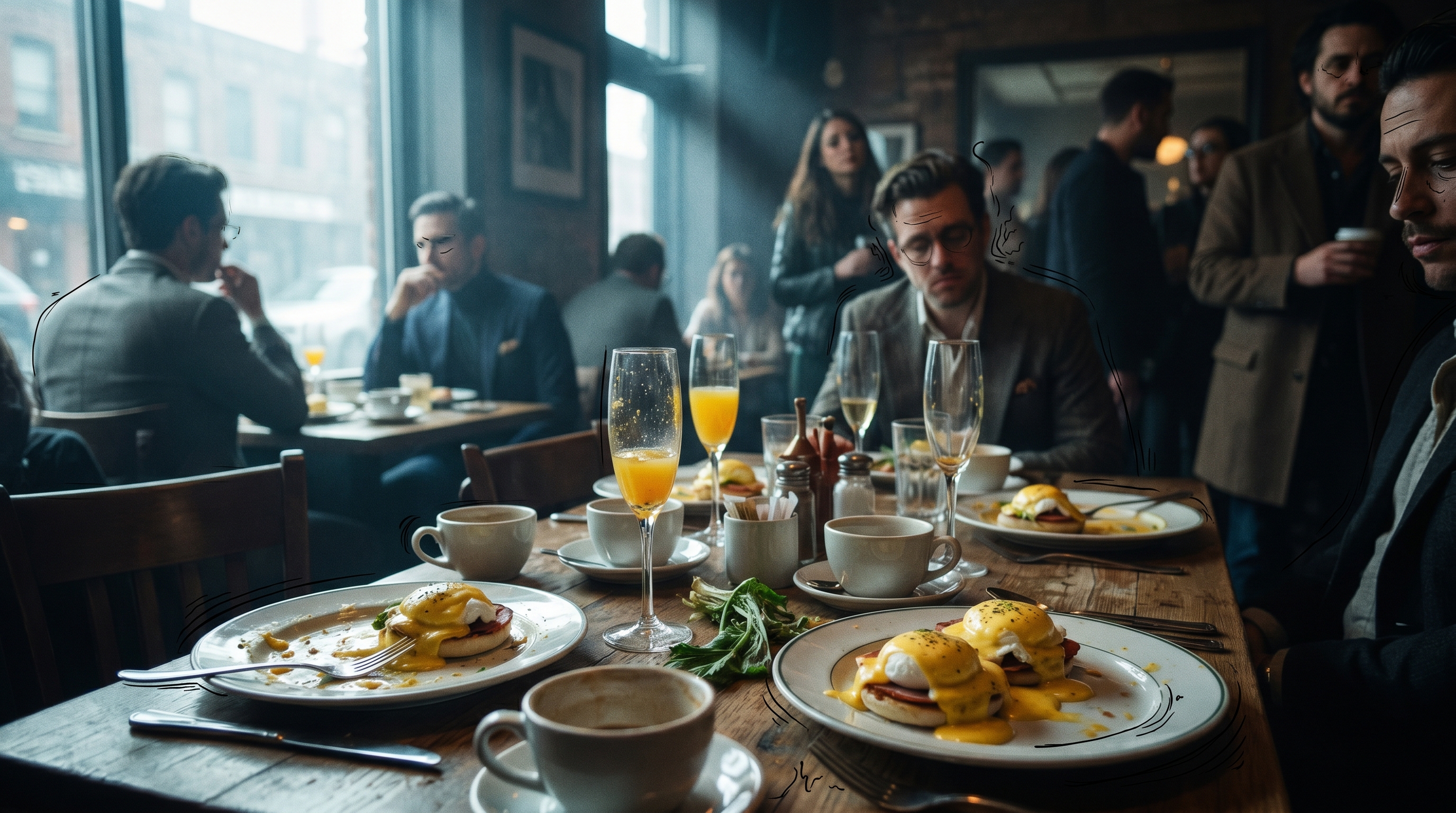



Scrambled eggs are not hard. They are just vindictive.
One second they’re glossy, soft, and wobbling like expensive silk pajamas. The next, they’re a pile of squeaky yellow insulation you could patch drywall with. That’s the real secret nobody tells you: scrambled eggs don’t get ruined while you’re cooking them. They get ruined in the five smug seconds after you think they’re done.
Carryover cooking, my friend. That’s the assassin.
The pan is still hot. The eggs are delicate little protein lunatics. You leave them in there one breath too long, and suddenly breakfast tastes like regret and office kitchenette sadness.
Everybody wants to talk about cream, milk, butter, whisking techniques, French style versus diner style, whether you should use chopsticks like some breakfast samurai. Fine. Cute. But if you don’t understand when to stop, all that other crap is theater.
The secret to perfect scrambled eggs is this: pull them before they look done.
Yes. Before.
If that bothers you, good. Cooking should humble you occasionally. It keeps you from buying avocado slicers.
The Real Villain Is Residual Heat, That Sneaky Bastard
Listen carefully, because this is where most home cooks get mugged in broad daylight.
Eggs keep cooking after you turn off the heat. They keep cooking when they’re still sitting in the pan. They keep cooking while you’re fumbling for pepper like a raccoon in a junk drawer. The pan is a cast-iron grudge. It does not care that you’ve emotionally moved on.
So when you wait until the eggs in the skillet look perfectly finished, you’ve already lost. You’re admiring a crime scene.
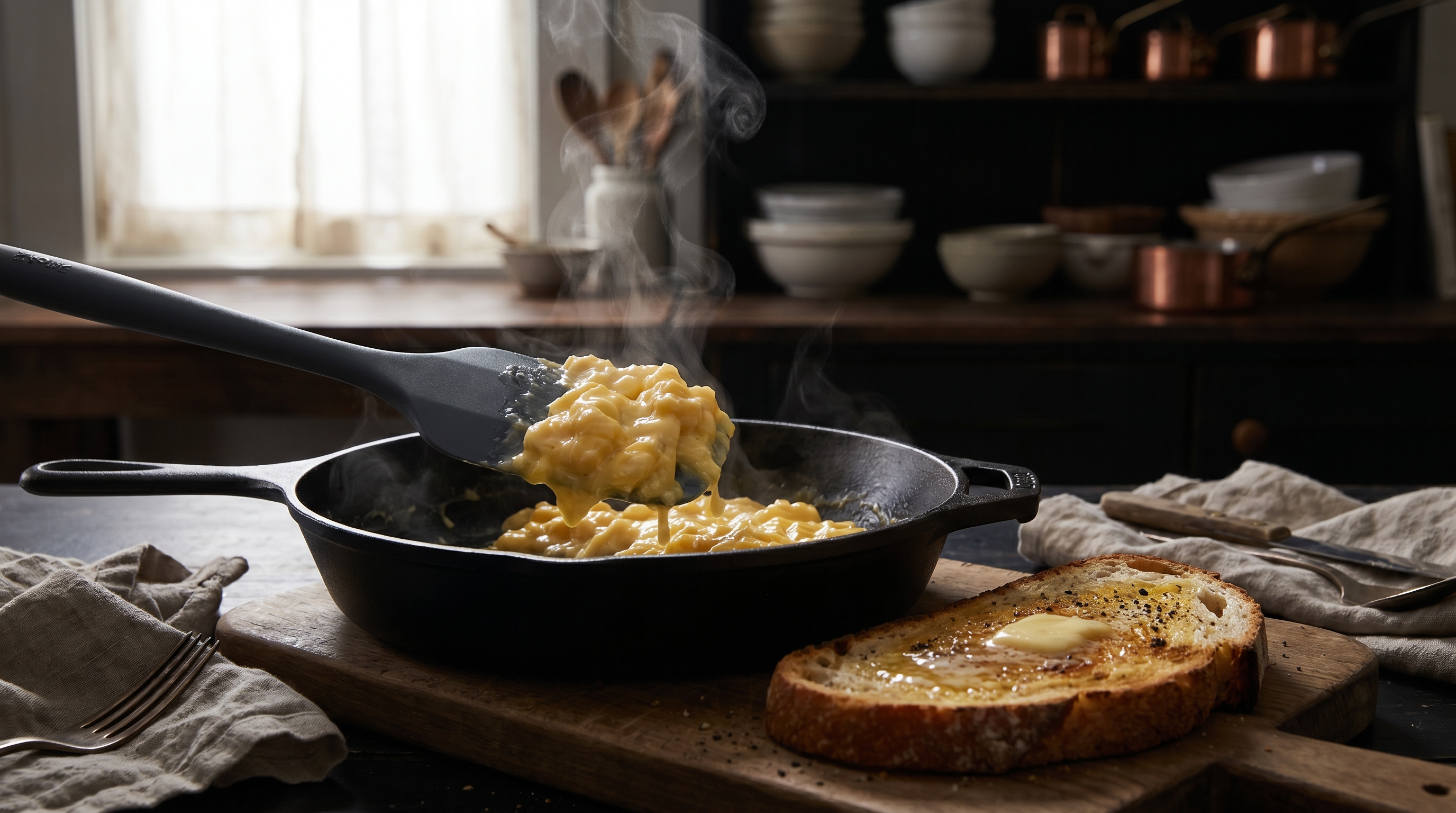
Perfect scrambled eggs should be slightly under where you want them when they leave the heat. Still glossy. Still tender. Still a little loose, like they have one final good idea left in them.
By the time they hit the plate, they settle into that soft curd heaven people keep pretending comes from a secret ingredient.
It doesn’t.
It comes from restraint. Which is irritating, because restraint is the least sexy instruction in cooking. Nobody wants to hear “stop earlier.” People want paprika fireworks and a monk’s forbidden butter ratio.
But breakfast is often won by the person who knows when to back the hell off.
What Perfect Scrambled Eggs Actually Look Like
Not dry. Not browned. Not fluffy in that aggressive banquet-hotel way.
Perfect scrambled eggs look moist. I said what I said. If that word upsets you, grow up and pass the toast.
They should form soft folds or small curds, depending on your style, but they should never look tight, shriveled, or matte. Matte eggs are dead inside.
Think satin, not sponge.
If liquid egg is still pooling everywhere, they’re undercooked. Obviously. We are not making breakfast ceviche. But if the eggs are fully set and firm in the pan, they’ll be overcooked on the plate.
You want that middle state: just barely set, softly mounded, with a little shine. The kind of eggs that slump onto toast instead of bouncing off it.
That’s your target.
And yes, this means you may have to trust your eyes more than the clock. Recipes that say “cook 3 to 4 minutes” are legally suspicious. Your stove is not my stove. Your pan has its own demons. Your burner might be powered by dragon rage or apartment misery.
Look at the eggs. The eggs are the evidence.
Heat Too High Is Why Your Eggs Taste Like a Gym Mat
If you blast scrambled eggs over high heat, you’re basically speed-dating disaster.
Egg proteins tighten as they cook. The hotter and faster you go, the tighter they seize up, squeezing out moisture until the curds get tough and watery at the same time. It’s a magnificent act of self-sabotage. Dry and wet. The divorce of texture.
Use medium-low or low heat.
Not because we’re delicate French ghosts floating through a butter cloud. Because lower heat gives you a larger window between “beautifully cooked” and “why are these squeaking against my teeth?”
Melt a little butter in a nonstick skillet. Not a heroic lake of it. Just enough to lubricate the operation and make life worth living.
Beat your eggs thoroughly before they hit the pan. Whites and yolks should be fully combined. Streaky eggs are fine if you’re making an omelet in a roadside diner at 2 a.m., but for creamy scrambled eggs, mix them properly.
Add a pinch of salt before cooking if you like. Contrary to old kitchen mythology, salting in advance does not ruin scrambled eggs. That rumor belongs in the same landfill as unitasker gadgets and motivational aprons.
Then cook gently.
Stir or fold with a silicone spatula. Push from the edges toward the center. Pause now and then. Let curds form. Don’t whip them around like you’re punishing them for your tax bracket.
Milk Is Not the Secret. Stop Dragging Milk Into This.
For some reason, people treat milk in scrambled eggs like it’s a spiritual inheritance.
A splash won’t necessarily ruin them. Cream can make things richer. Crème fraîche is lovely if you’re feeling decadent and a little theatrical. But none of that fixes bad timing.
You can add dairy if you want, but it is not the secret to perfect scrambled eggs. The secret is removing them while they still have some softness left to give.
That’s it. That’s the magic trick. The rabbit was in the hat the whole damn time.
If anything, too much liquid can make your eggs weep like a groom reading his vows. Suddenly there’s water leaking onto the plate and your toast is taking psychic damage.
Butter? Good.
A spoonful of cold crème fraîche stirred in at the end? Excellent. It cools the eggs slightly and helps stop the cooking while adding richness.
Half a mug of milk because your aunt said so in 1997? Absolutely not. We have suffered enough as a species.
The Off-Rails Section: A Pan Is Basically a Breakup You Haven’t Left Yet
Stay with me.
A hot pan is like a relationship that’s already over, but you’re still standing in the kitchen pretending one more conversation will fix it. The danger is not the obvious fire. The danger is the lingering heat.
That’s how eggs get you.
You think, “I’ve turned off the burner, everything’s fine.” Wrong. The pan is still radiating intent. It has plans for those eggs. Dark plans.
This is why chefs plate scrambled eggs fast. Some even transfer them to a cool plate or bowl immediately. Not because they’re dramatic little sauce goblins, but because they understand momentum. Heat has momentum. So does stupidity.
Honestly, half of cooking is learning that things keep happening after you stop touching them. Steak rests. Pasta keeps softening. Cookies firm up. Anger echoes. Text messages live forever.
The universe loves carryover.
So if you learn one thing from scrambled eggs, let it be this: the right move in life and breakfast is often to step away slightly before your ego feels ready.
See? Accidentally profound. Now get back to the stove.
The Technique That Actually Works Every Time
Here’s the clean, non-bullshit method.
Crack 4 eggs into a bowl.
Add a pinch of kosher salt. If you want, add a tiny splash of water or a tablespoon of dairy, but keep it modest. Beat until completely combined and a little frothy.
Set a nonstick skillet over medium-low heat. Add 1 tablespoon butter.
When the butter melts and foams gently — not browns like it’s applying for a new identity — pour in the eggs.
Let them sit for a few seconds, then use a silicone spatula to push the cooked edges toward the center. Tilt the pan so uncooked egg flows into the bare spots.
Repeat slowly.
If you want larger, softer curds, stir less. If you want smaller, creamier curds, stir more frequently. Both are valid. This is not a civil war.
When the eggs are mostly set but still slightly glossy and loose, remove the pan from the heat immediately. Immediately. Not after toast. Not after checking your phone. Not after telling someone to set the table.
Now you can add black pepper, chopped chives, a dab of crème fraîche, or a little extra butter if you want to be obscene in the right way.
Transfer to a plate at once.
Eat while hot.
That’s it.
The Mistakes That Keep Turning Breakfast Into Punishment
Let’s name names.
Cooking on high heat.
Leaving eggs in the hot pan while you do literally anything else.
Waiting until they look fully done before removing them.
Using a pan that scorches like a personal vendetta.
Adding so much milk the eggs turn into damp cafeteria gossip.
And my favorite criminal behavior: over-stirring from the first second like you’re trying to summon weather. Calm down. Let curds form. You are making eggs, not a potion.
Also, season after tasting if you’re adding salty cheese like feta, goat cheese, or grated cheddar. Otherwise you can tip the whole thing into salinity levels normally associated with coastal flooding.
What to Add If You’re Not a Coward
Once you’ve nailed texture, now we can flirt.
Soft scrambled eggs love fresh chives, finely sliced scallions, a little tarragon, or dill if you’re feeling like a Baltic aunt with excellent boundaries.
They also love smoked salmon, buttered mushrooms, grated Parmesan, or a spoonful of chili crisp. Hot sauce is welcome, but don’t use it to hide bad eggs. That’s condiment laundering.
Toast matters too.
Put these eggs on properly toasted sourdough with salted butter and black pepper, and suddenly the morning looks less like an ambush. Put them on a pale floppy bread slice and you’ve built a luxury bathroom on a swamp.
Respect the foundation.
The Secret Nobody Tells You Because It Sounds Too Simple
People don’t tell you the truth about scrambled eggs because the truth is boring on paper and miraculous in the pan.
Pull them early.
That’s the whole crooked gospel.
Not when they look perfect in the skillet. When they look almost perfect. When they still have a little shine. When your nervous brain whispers, “Are these done enough?” That’s usually the exact moment to get them the hell out.
Cooking is full of loud myths. Secret ingredients. Family hacks. Dumb little rituals passed down like cursed jewelry.
But sometimes the thing that changes everything is just understanding that heat keeps moving, even after you think the moment has passed.
And maybe that’s why scrambled eggs feel bigger than breakfast. They reward attention. They punish impatience. They ask you to notice the difference between done and overdone, between confidence and overconfidence.
A good plate of eggs lasts maybe five minutes.
That’s part of the tenderness of it.
You stand there in your kitchen, half-awake, hair like a frightened shrub, and for one brief moment you make something soft, warm, rich, and exactly right. Not because you dominated it. Because you paid attention.
That’s the secret.
Not milk. Not cream. Not some copper pan blessed by breakfast monks.
Just knowing when enough is enough — and having the grace to take the eggs off the heat before you ruin a good thing.