


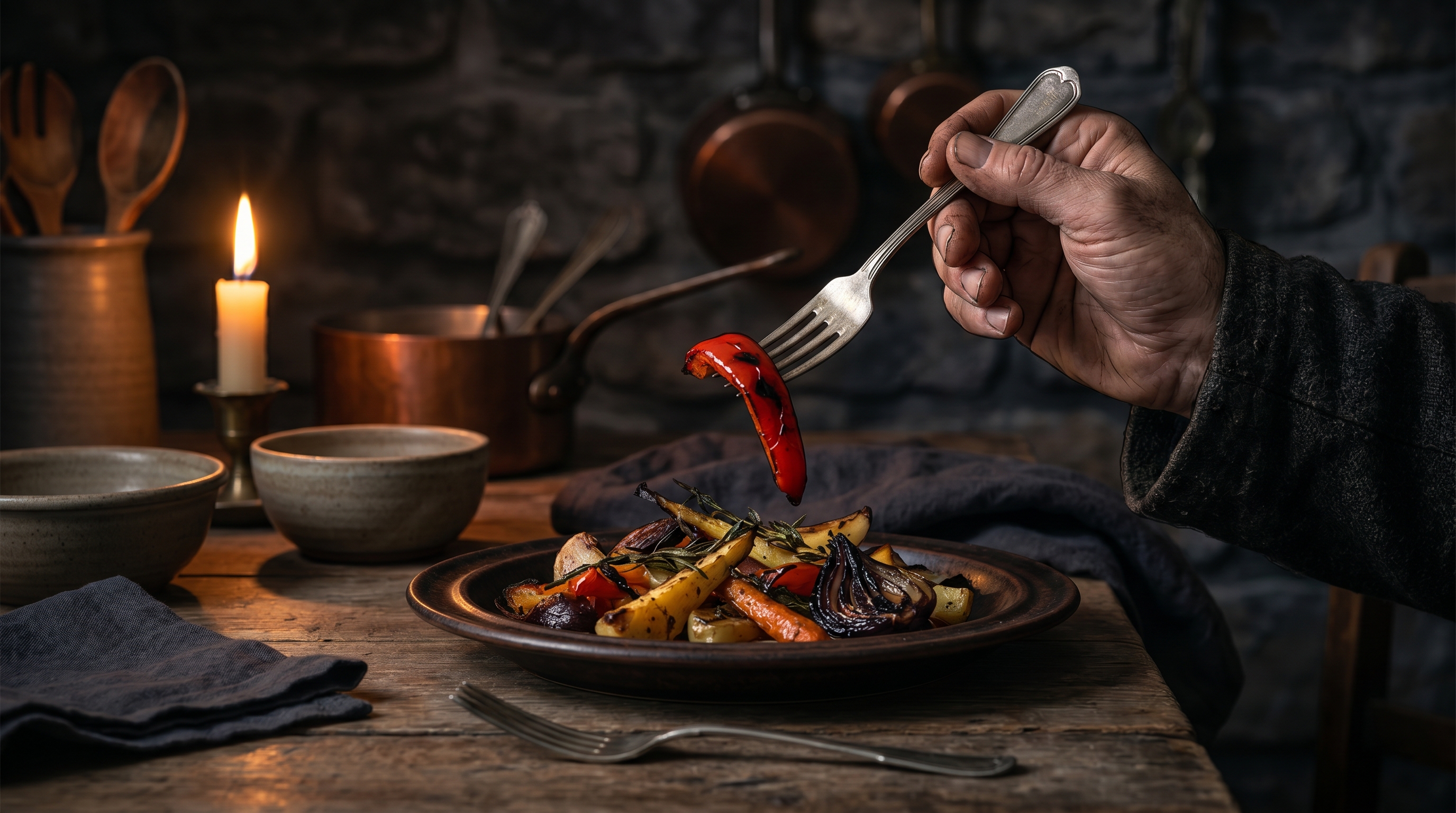
Picky eating isn’t a preference. It’s either a genuine nervous system uprising or a tiny domestic coup staged by one adult man in front of a plate of roasted carrots.
Let’s separate actual food fear from theatrical nonsense before one bell pepper ruins another dinner.
You know this person.
Maybe it’s you. Maybe it’s your spouse, your kid, your friend who says, with the solemnity of a Civil War widow, “I just don’t do textures.” Not all textures? Really? Because you ate half a bag of gummy worms in the car like a raccoon with Venmo.
Here’s my position, carved into a cutting board with a chef’s knife and poor emotional regulation: some picky eaters are brave as hell. Some are cowards in a fleece pullover. The trick is telling which is which.
And yes, there is a trick.
Because food is not just food. It’s memory, control, class anxiety, childhood trauma, habit, sensory wiring, and the unholy power of one bad casserole in 1998. A single mouthful of gray, steamed zucchini can haunt a person for decades. I’ve seen it. We all carry culinary ghosts.
But some people aren’t haunted.
Some people are just lazy with a fork.
The brave picky eater is fighting an actual dragon
Listen carefully, because this matters.
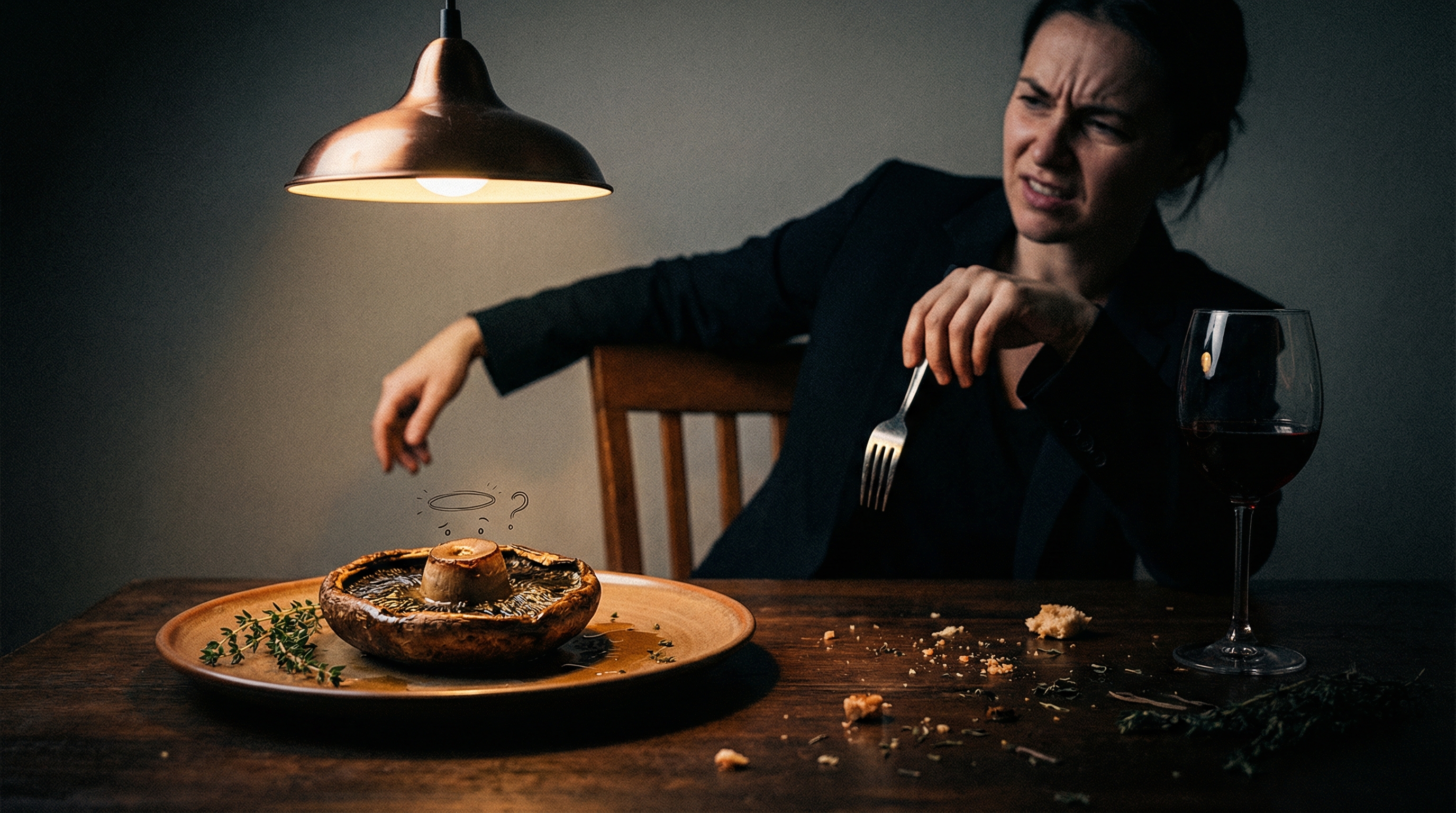
There are people for whom certain foods don’t register as “a little unpleasant.” They register as danger. The smell is too loud. The texture feels like a damp sweater in the mouth. A mushroom doesn’t taste earthy; it feels like chewing on a basement.
That is not drama. That is a body throwing a fire alarm.
If someone has sensory processing issues, ARFID, autism-related food aversions, OCD-driven contamination fears, or a long ugly history of being forced to eat until they cried, then trying a new food can be legitimately brave. Not Instagram-brave. Not “I wore chartreuse” brave. Real brave.
The kind where your hands tense before the bite even lands.
The kind where a spoonful of chili with visible beans feels like defusing a bomb with your tongue.
And when those people try something anyway? That is courage. Tiny, weird, beautiful courage. I respect the hell out of it. If a grown adult says, “I usually can’t do mixed textures, but I’m trying one bite,” you shut up, you don’t stare, and you definitely don’t do that cheery hostage-negotiator voice.
No “See? It’s not that bad!”
I will throw you into a decorative herb garden.
Because bravery in food often looks stupid from the outside. It looks like someone taking forty-five seconds to inspect a raviolo like it contains state secrets. It looks like a child touching a strawberry to their tongue and recoiling as if it whispered tax law. It looks ridiculous, and it is still brave.
Courage is not always elegant.
Sometimes courage is one pea.
The coward picky eater is protecting a fake identity
Now let’s discuss the frauds.
The fraud picky eater doesn’t fear food. They fear being inconvenienced by surprise. They built a personality out of chicken tenders, plain pasta, and the lie that seasoning is “too much.” This person is not defending their nervous system. They are defending a rut so deep it has municipal zoning.
You know the type.
They say they “hate vegetables,” as if asparagus, carrots, charred cabbage, blistered green beans, sweet corn, fennel, and a tomato in August are one single vegetable in a trench coat. That’s not discernment. That’s culinary illiteracy with confidence.
They claim onions are disgusting, then devour onion powder in ranch dip, onion in salsa, onion in burger sauce, onion melted into soup, onion cooked into Bolognese for three hours until it practically sings you a lullaby. You don’t hate onions, sweetheart. You hate evidence.
That’s the key distinction.
Cowardly picky eaters often don’t hate flavors. They hate seeing the thing. They want the food to arrive cosmetically reassuring, like dinner got Botox. No lumps, no flecks, no stems, no visible humanity.
If you only like tomatoes after they’ve been blitzed, strained, sweetened, and shipped in a dinosaur-shaped bottle, congratulations: you don’t hate tomatoes. You hate being confronted with reality.
Which, frankly, is very modern.
Your childhood palate is not a sacred artifact
A lot of picky adults are just living inside a menu they built at age eight and never renovated.
Chicken nuggets. Buttered noodles. Grilled cheese. Maybe a taco if nobody gets reckless with cilantro. It’s the culinary equivalent of still sleeping with your childhood blanket, except the blanket is beige and comes with fries.
And look, I get it.
Childhood shapes the palate hard. If you grew up in a house where every vegetable was boiled into Army fatigue and every pork chop had the moisture profile of attic wood, of course you think you hate half the produce aisle. You were introduced to food by criminals.
A badly cooked vegetable can ruin a decade.
Brussels sprouts used to be everybody’s villain because people treated them like punishment. Then somebody discovered high heat, olive oil, salt, and acid, and suddenly the same sprouts came out crisp-edged and nutty, like tiny green miracles dragged through bacon fat and redemption.
Same with broccoli.
If your only broccoli experience was a pale, steamed bouquet that smelled like regret, I’m not blaming you. Roast it at 425°F until the edges char. Toss with olive oil, kosher salt, red pepper flakes, lemon zest, maybe grated Parmesan if you’re feeling romantic. Now we’re talking. Now the thing has hips.
Many picky eaters aren’t cowards or heroes. They’re victims of bad technique.
That’s the part nobody likes to admit.
The texture thing is real, but sometimes it’s also nonsense
Texture is the battlefield where this whole war gets weird.
Texture matters. It matters enormously. Crisp, creamy, chewy, silky, crunchy, juicy — these are not side notes. They are the architecture of pleasure. A good roast potato is not delicious because it is potato-shaped. It’s delicious because the outside shatters and the inside goes soft as a hymn.
So yes, texture aversions can be dead serious.
But sometimes “texture” gets used the way corporate offices use “circling back” — as a polite phrase covering absolute chaos.
“I can’t do yogurt texture,” says a man who drinks a milkshake so thick it needs counseling.
“I hate mushy foods,” says a woman currently elbow-deep in boxed mac and cheese.
“My issue is sliminess,” says a guy who eats wings with enough sauce to lubricate an engine.
Come on. Tighten it up.
If the aversion is specific, consistent, and deeply felt, I’m with you. If the aversion mysteriously disappears the second the food is breaded, deep-fried, or hidden under cheddar, then you don’t have a sensory boundary. You have a PR team.
A brief off-rails detour about wolves, salads, and masculinity
You want to know one of the dumbest things on Earth?
The number of people — mostly men, let’s not lie in God’s kitchen — who act like eating vegetables threatens their bloodline. They approach a salad like it personally insulted their truck.
Sir, it is arugula. It is not trying to feminize you. It is a leaf with peppery notes. Calm your magnificent tits.
There is a bizarre cultural script that says refusing “rabbit food” is rugged, while ordering something bright, herbal, acidic, or green is somehow delicate. This is nonsense invented by people whose idea of adventure is smoked bourbon mayonnaise.
You know what’s actually rugged? Eating anchovies. Loving bitter greens. Appreciating the feral snap of a radish with butter and flaky salt. Learning to enjoy olives, blue cheese, black coffee, kimchi — foods with edges, foods with attitude, foods that don’t beg to be liked.
That’s adult palate territory.
A Caesar salad, properly made, is not weak. It’s a knife fight in a bowl. Garlic, anchovy, lemon, Dijon, Parmesan, black pepper, raw egg yolk if you’ve got the nerve. That dressing has more swagger than most men at a brewery.
So if your food identity is “I only eat meat and beige,” that’s not masculinity.
That’s fear in cargo shorts.
How brave people actually get less picky
The brave picky eater doesn’t pretend everything is fine.
They build a bridge.
That’s the move. Not “just eat it.” Not “one day I suddenly loved oysters.” No. Real progress in picky eating usually comes from controlled exposure, repeated tasting, and changing one variable at a time like a sane person.
If raw tomatoes are the devil, try slow-roasted tomatoes. If onions gross you out, start with onions cooked down in soup until they melt into sweetness. If fish is too fishy, begin with mild white fish like cod, not a slab of mackerel that tastes like Poseidon’s gym sock.
If crunch is safe, use crunch.
Panko-crusted zucchini fries. Roasted chickpeas. Thin shaved fennel with lemon. Slaw instead of cooked cabbage. Pickles before cucumbers. Tempura before eggplant parm. Meet the palate where it lives, then gently drag it toward civilization.
And season properly, for the love of all holy starches.
So many picky eaters have never actually tasted a vegetable with enough salt. Salt is not cheating. Salt is glasses for flavor. Acid helps too — lemon juice, sherry vinegar, rice vinegar. Fat carries flavor and softens bitterness. Butter is not a moral failure. Butter is often the ambassador.
Use high heat. Get color. Caramelization is a conversion experience.
Nobody’s life was changed by wet cauliflower.
How to tell if you’re being brave or being a little baby about dinner
Here’s your test.
When you reject a food, ask yourself why.
Does it trigger a real gag reflex, panic, overwhelm, or a consistent sensory revolt? Fine. That’s data. Respect it.
Or are you rejecting it because it’s unfamiliar, visible, mixed in, or not part of your personal toddler constitution? That is not a medical event. That is you being emotionally outplayed by a roasted red pepper.
Another test: are you curious?
Brave picky eaters stay curious even when they struggle. They’ll say, “I can’t do that version, but I might try it another way.” Coward picky eaters declare a lifetime ban after one bad encounter at a chain restaurant in 2006.
That’s not discernment. That’s an embargo.
You are allowed dislikes.
Everybody has them. I don’t trust anyone who claims to love every food equally. That person is either lying or trying to sell me a seed oil newsletter. But adult eating requires some humility. Some experimentation. Some willingness to admit that maybe, just maybe, the thing you “hate” was simply cooked by someone with the imagination of a parking garage.
The final verdict, before dinner gets cold
So: are picky eaters brave or cowards?
Yes.
Some are doing hand-to-hand combat with sensory landmines every time they sit down to eat. Those people deserve patience, respect, and better strategies than public shaming disguised as encouragement.
Some are hiding behind stale preferences like they’re family heirlooms. Those people need to stop acting like a slice of eggplant is an ideological threat.
Food asks something of us.
Not obedience. Not fake sophistication. Just a little openness. A little honesty. The willingness to tell the difference between “this hurts me” and “this challenges my habits.” That difference matters.
Because dinner is one of the last places we still reveal ourselves without meaning to.
What we avoid. What we crave. What we learned to fear. What we’re finally ready to taste.
And when somebody takes one shaky, suspicious bite of something new — whether it’s a child, a partner, or your own stubborn ass at the counter with a fork — there’s something tender in that moment. A small revolt against the old script.
That’s not just eating.
That’s hope, wearing olive oil.