
One mushroom hits the plate and suddenly we’re treating dinner like a hostage negotiation.
Listen. I have cooked for toddlers, drunks, gym rats, heartbreak victims, and one man who claimed cilantro was "too loud." Picky eaters are not one species. They are a chaotic wildlife preserve.
Some are brave.
Some are cowards.
And some have perfectly legitimate sensory issues and should be protected like rare orchids in a hailstorm.
The problem is we keep throwing all of them into one greasy little bucket labeled "difficult," which is lazy. It’s the culinary equivalent of calling every barking animal a dog. No, my friend. Sometimes that thing is a chihuahua. Sometimes it is a wolf. Sometimes it is your uncle refusing onions because he had one bad fajita in 2009 and built a religion around it.
So let’s do what civilized people do.
Let’s make some distinctions while standing over a cutting board, slightly sweaty, wielding a knife sharp enough to encourage honesty.
There Are Picky Eaters, and Then There Are People Who Simply Love Control
A real food aversion is not the same thing as culinary tyranny.
If someone says oysters feel like swallowing a haunted contact lens, I get it. Texture is powerful. Mouthfeel can wreck a person. Slimy, squeaky, mushy, fibrous, gelatinous — these are not just adjectives. They are emotional events.
If someone says yogurt makes them gag but they can eat sour cream, that sounds irrational until you remember the human brain is a magnificent trash fire. Temperature, aroma, expectation, childhood memory — all of it matters.
But then there’s the other type.
The performance picky eater.
This person announces "I’m just really picky" with the smug confidence of a man describing his vinyl collection. They don’t just dislike a food. They require the entire room to orbit that dislike. The burger can’t have tomato near it. The salad dressing must be exiled to a separate county. A green fleck of parsley lands on the fries and suddenly we’re calling in air support.
That’s not bravery. That’s border control.
And before you start clutching your napkin, yes, people are allowed preferences. I hate wet sleeves and songs where people whisper-sing like they’re trying not to wake a bat. We all have limits.
But there’s a difference between "I can’t do olives" and "If an olive was once in the building, I need a new plate, new fork, and emotional compensation."
The Brave Picky Eater Exists, and You’ve Probably Mocked Them
Here’s the tender bit, you beautiful goblin: some picky eaters are actually doing something kind of hard.
When a person with real food anxiety, sensory issues, autism-related texture sensitivity, ARFID tendencies, or just a long history of bad experiences tries a new food, that can be genuine courage. Not movie courage. Not jumping out of a helicopter courage.
But quiet, humiliating, deeply human courage.
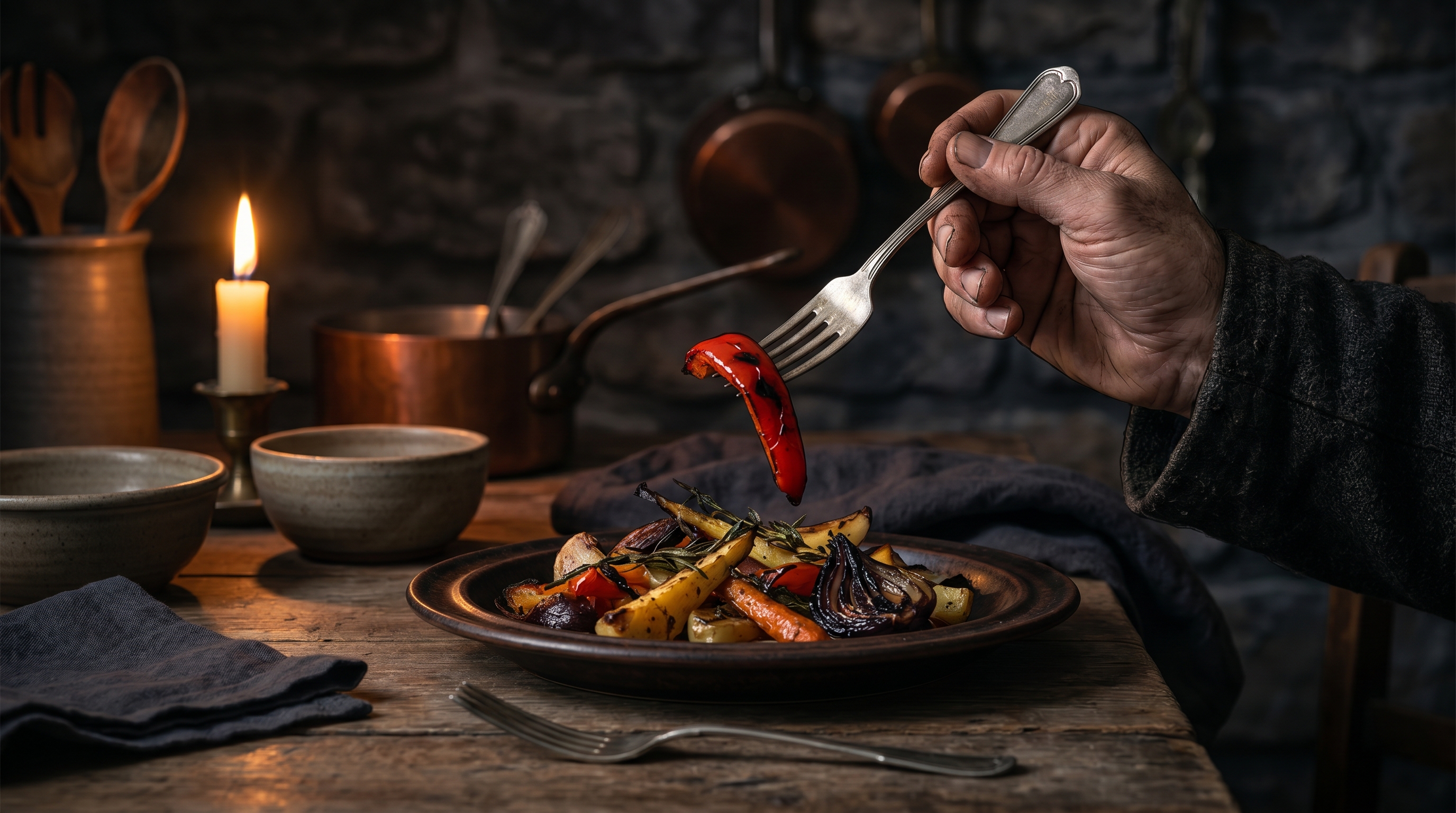
The kind where everyone else at the table is casually chewing pad thai while you’re staring at one roasted carrot like it contains classified information.
That’s brave as hell.
Especially because people are weirdly moral about food. We act like eating eggplant means you’re sophisticated, and refusing eggplant means you’ve failed as a citizen. Relax. It’s a nightshade, not jury duty.
A brave picky eater says, "I’m nervous, but I’ll try one bite."
They sniff it. They poke it. They maybe hate it. But they enter the arena.
You know what that deserves? Respect.
Not pressure. Not the classic family move of turning dinner into a tribunal.
"Just try it."
"You haven’t even tried it."
"You’ll like it if you try it."
No, Deborah, maybe they won’t. Maybe your casserole still tastes like despair wrapped in cheddar. Let’s leave room for that possibility.
The Cowardly Picky Eater Is Usually Scared of One of Three Things
Now let’s sharpen the blade and get honest.
A lot of so-called picky eating is just fear wearing a condiment as a disguise.
Fear of unfamiliarity.
Fear of losing control.
Fear of being briefly uncomfortable.
That last one runs modern life like a crooked mayor.
Some adults refuse entire categories of food not because they’ve tried them and object, but because they’ve decided in advance that they are "gross." This is how a person reaches age 37 never having eaten a bean on purpose.
A bean.
The humble little protein pebble that built civilizations.
They’ll say things like, "I don’t eat seafood," having sampled exactly one overcooked shrimp ring at a holiday party in 2014. That’s not discernment. That’s trauma fan fiction.
And look, I understand the instinct. New food can make you feel exposed. You don’t know the texture, the smell, the social rules. You take one bite of kimchi, natto, blue cheese, or bitter melon and suddenly your face is doing things that would concern a doctor.
But being an adult means occasionally allowing your mouth to have a surprising afternoon.
If your entire food identity is beige, dry, and served with ranch, that’s not having standards. That’s hiding from life in cargo shorts.
How Picky Eaters Get Made: A Short Trip Through the Haunted Carnival of Childhood
Nobody comes out of the womb demanding plain buttered noodles and rejecting visible onion.
This is learned behavior, reinforced behavior, or sensory wiring doing backflips.
Sometimes picky eating starts with parents who panic. Kid refuses broccoli once, and now the household serves only dinosaur-shaped negotiations. Sometimes it starts with adults who force-feed, shame, bargain, or do that sinister "airplane" spoon routine like tiny aviation will solve a trust issue.
Sometimes it’s texture sensitivity from the jump. Crunch is fine. Mush is death. Mixed textures are a crime scene. Casseroles become impossible because every bite is a committee meeting.
And sometimes — this is my favorite dark little jewel — picky eating becomes identity.
The family knows you as the one who hates tomatoes. Your friends joke about it. You joke about it. It calcifies. Years pass. You haven’t reevaluated the tomato situation since Obama’s first term, but now the bit owns you.
This happens all over life.
People decide they’re bad at dancing, bad at math, not a camping person, not a sushi person, and then spend twenty years defending a prison they decorated themselves.
Meanwhile, cherry tomatoes are out here bursting in olive oil with garlic, turning sweet and jammy and gorgeous, and you’re still acting like one slice on a sandwich personally insulted your ancestors.
Off the Rails for a Moment: The Horse Situation
I need to tell you something unrelated that is actually related.
Horses are too emotional for their size.
That’s insane, right? A thousand-pound panic machine with eyelashes. One plastic bag skitters by and the horse decides the devil has entered the cul-de-sac. Yet we accept this. We say, yes, that enormous beast is frightened of a hat.
Humans do the same thing with food.
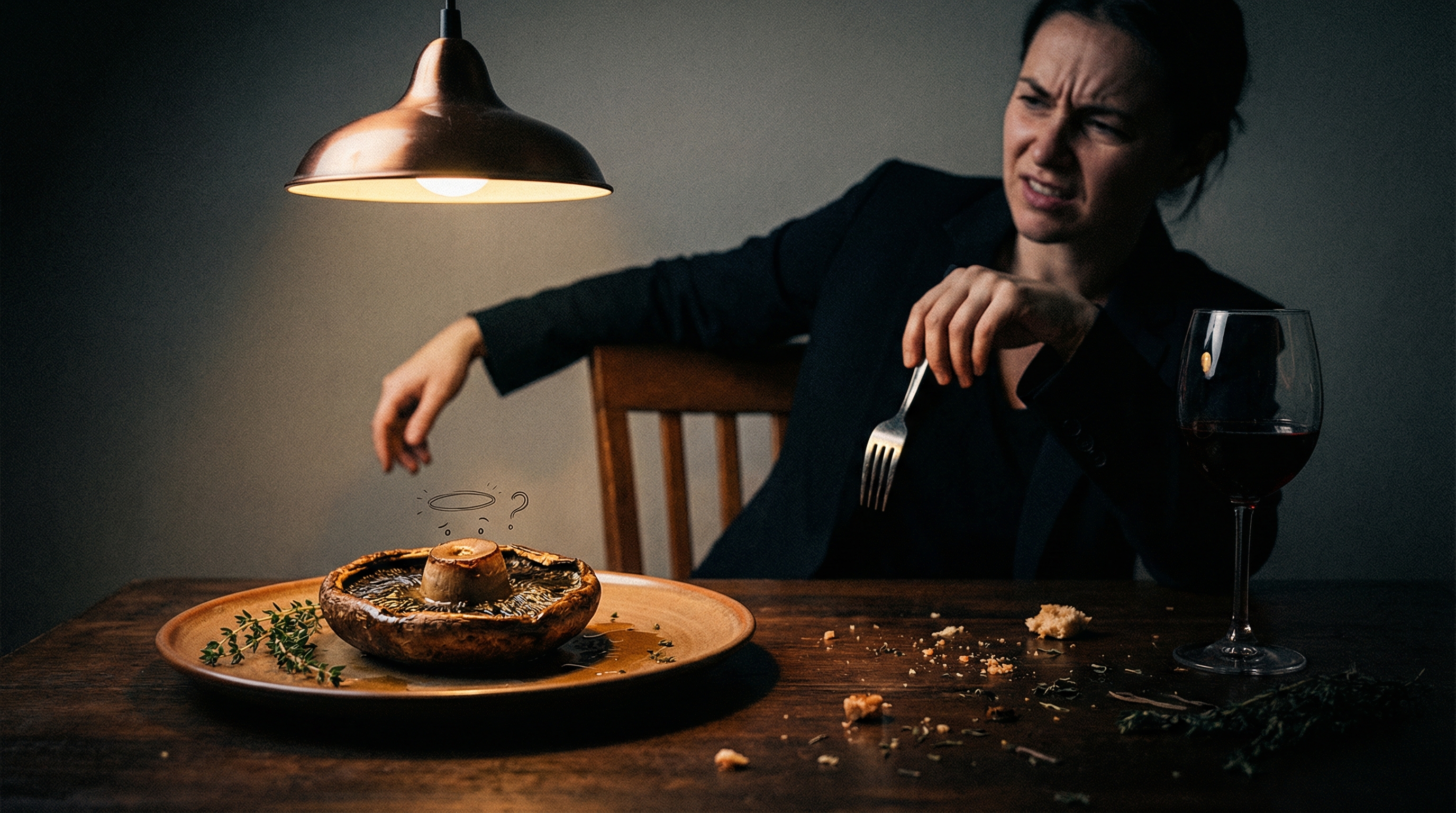
A grown adult takes one whiff of goat cheese and reacts like the refrigerator has become sentient. Another sees mushrooms and starts speaking in legal language. We are, all of us, just elegant livestock with opinions.
The point is not to mock fear itself.
The point is to stop letting fear pretend it’s sophistication.
"I have a very refined palate" says the man who only eats chicken tenders, fries, and one specific brand of barbecue chips. Sir, that is not refinement. That is a gas station sonnet.
And yet.
If that same man one day tries a crisp king oyster mushroom seared hard in butter until golden, with thyme and a splash of soy, and discovers it’s meaty and savory and absolutely filthy in the best way — that’s a beautiful thing.
Not because mushrooms are morally superior.
Because he escaped one tiny room in his own head.
If You Cook for Picky Eaters, Stop Waging War Like an Amateur
You do not beat picky eating with lectures.
You beat it with strategy, respect, and the occasional act of sneaky genius.
First: separate texture from flavor.
A person who hates raw onions may love onions slowly cooked in olive oil and butter for 20 to 30 minutes until they collapse into sweet bronze silk. Same allium, different universe. Mushrooms? Fine diced and browned until their water cooks off can disappear into ragù, meatballs, or fried rice instead of arriving as floppy UFOs.
Second: use bridges.
If someone loves crispy potatoes, slide them toward roasted cauliflower with the same high-heat treatment: 425°F, enough oil to glisten, enough salt to matter, edges charred like they’ve seen some things. If they love chicken nuggets, panko-crusted fish is not a betrayal. It’s a gateway drug.
Third: stop serving vegetables like punishment.
Of course boiled Brussels sprouts made someone weep. You took a perfectly good brassica and simmered it into army-green sadness. Halve them. Roast cut-side down. Salt aggressively. Finish with lemon and grated Parmesan or a honey-mustard glaze. Suddenly the room goes quiet except for the sound of personal growth.
Fourth: offer low-stakes bites.
A spoonful. A corner. A taste from your plate. Don’t slap down a heroic serving of chickpeas and demand transformation by sunset. That’s not exposure. That’s ambush.
Fifth: let people dislike things.
This is the part control freaks hate.
The goal is not universal acceptance of eggplant. The goal is curiosity without humiliation. If they try it and hate it, congratulations: that’s still progress. The mouth did field research.
So, Are Picky Eaters Brave or Cowards?
Yes.
Damn it, I know. I said I wouldn’t hedge. But life is a messy stovetop and this one needs both burners on.
The brave picky eater knows food can be hard and keeps showing up anyway. They negotiate honestly. They try things. They admit fear without building a personality around it.
The cowardly picky eater refuses before the fork lands. They confuse familiarity with quality. They outsource their discomfort to everyone else at the table and call it preference.
One is dealing with a real internal barricade.
The other is just making their own world smaller and asking for applause.
Here’s my ruling from the grease-stained bench: picky eating is not a character flaw. But refusing curiosity absolutely can be.
You don’t need to like everything.
God knows I don’t. I think truffle oil smells like a robot had a panic attack in a forest. I will die on that hill, beautifully dressed, with a cast-iron skillet in my arms.
But you should remain available to surprise.
That’s the whole game.
Food is one of the few daily chances we get to meet the unfamiliar in a small, survivable way. A bite of something strange. A texture you once hated. A spice that opens like a lit match. A dish from somebody else’s childhood becoming part of your own.
That’s not just eating.
That’s practice for being alive with other people.
So if you’re picky, be picky honestly.
Protect what genuinely overwhelms you.
Challenge what’s just habit in a fake mustache.
And if you cook for someone picky, don’t treat them like a project or a punchline. Feed them well. Leave a door open. Roast the carrots until sweet. Cut the onions small. Put the sauce on the side if you must.
Because every now and then, between the fear and the fuss and the dramatic inspection of a single pea, a person takes one bite and their whole face changes.
That moment is quiet magic.
A border opens.
And dinner, the ordinary little beast, becomes mercy.