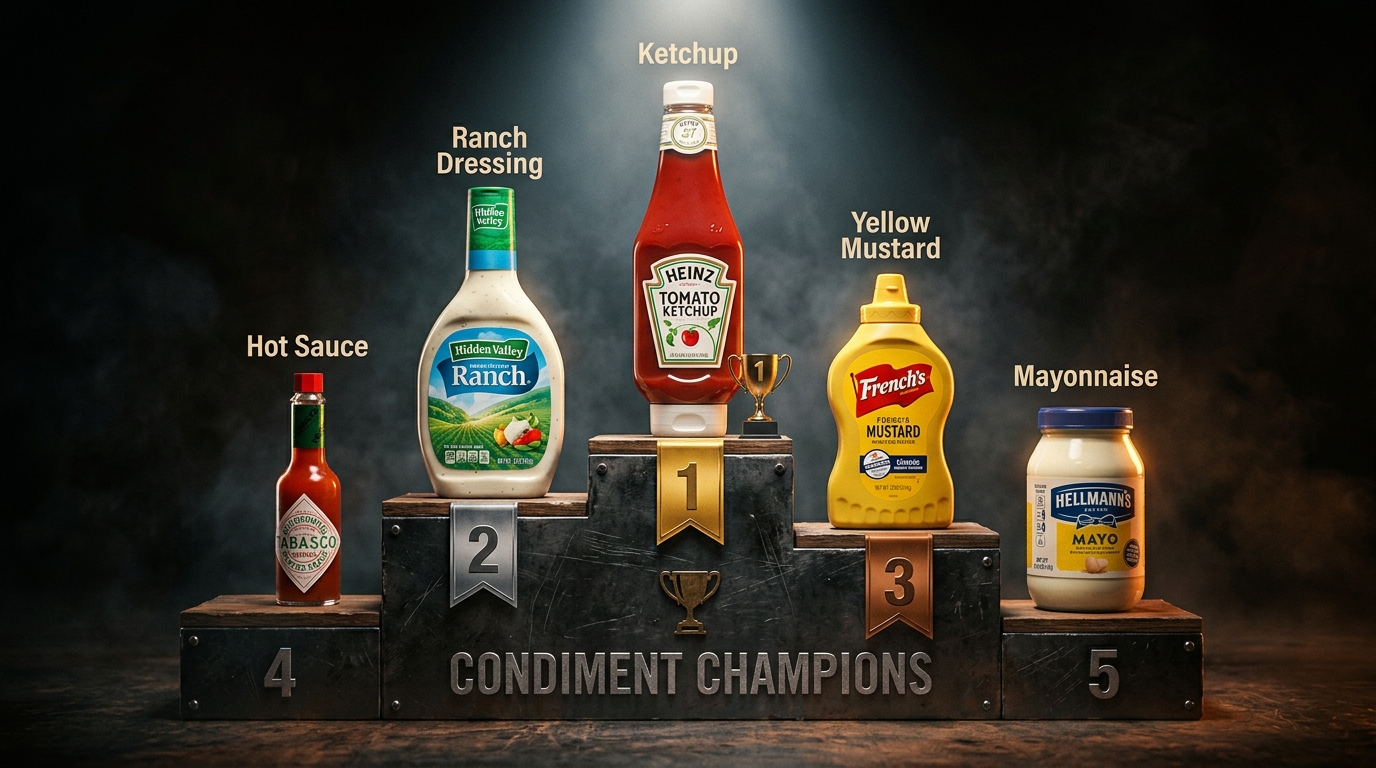



Mayonnaise discourse tells me everything I need to know about a person. There are exactly two camps: people who think mayo is disgusting, and people who have only ever met the sad jarred stuff sweating on gas station sandwiches like it's doing hard time. If your entire relationship with mayo is a smear of gelatinous white paste on a cold deli sub that was made with the enthusiasm of a man filing his taxes, I get it. I'd hate mayo too.
But here's the thing: you don't hate mayo. You hate bad mayo. And that distinction is the difference between thinking wine is gross because you drank Franzia in a dorm room and understanding that a proper Burgundy can make a grown adult weep into their charcuterie.
Proper mayo is not "white slime." Proper mayo is what happens when fat and acid get their act together and produce something greater than either of them deserves.
So sit down. We're fixing this.
The Science of Emulsification (Or: How Egg Yolks Are Tiny Diplomats)
Let's talk about why mayo even works, because it shouldn't. Oil and water-based liquids (like lemon juice or vinegar) want absolutely nothing to do with each other. They're the divorced couple at Thanksgiving — technically in the same room, aggressively not interacting.
Enter the egg yolk: nature's most underrated peacekeeper.
Egg yolks contain lecithin, a phospholipid that has one end attracted to water and the other attracted to fat. It physically positions itself at the boundary between oil droplets and the acid, wrapping each tiny oil droplet in a protective coat so they can't merge back together. This is called an emulsion — a stable suspension of one liquid in another that normally wouldn't mix.
When you drizzle oil slowly into an egg yolk while whisking like your forearm owes you money, you're breaking that oil into millions of microscopic droplets, each one individually chaperoned by lecithin molecules. The result is a thick, creamy, stable sauce that is chemically closer to a miracle than most things that get called miracles.
The ratio matters enormously. One large egg yolk can emulsify roughly 3/4 cup of oil before the system collapses. Push past that and you'll get a broken, greasy puddle that looks like regret tastes. Temperature matters too — room temperature ingredients emulsify far more reliably than cold ones, because warmer lecithin molecules are more flexible and can wrap around oil droplets more efficiently.
This is the same science behind hollandaise, vinaigrettes, and Caesar dressing. Once you understand emulsification, you understand half of French cooking. The other half is butter and denial.
Homemade Mayo in Five Minutes (Yes, Really)
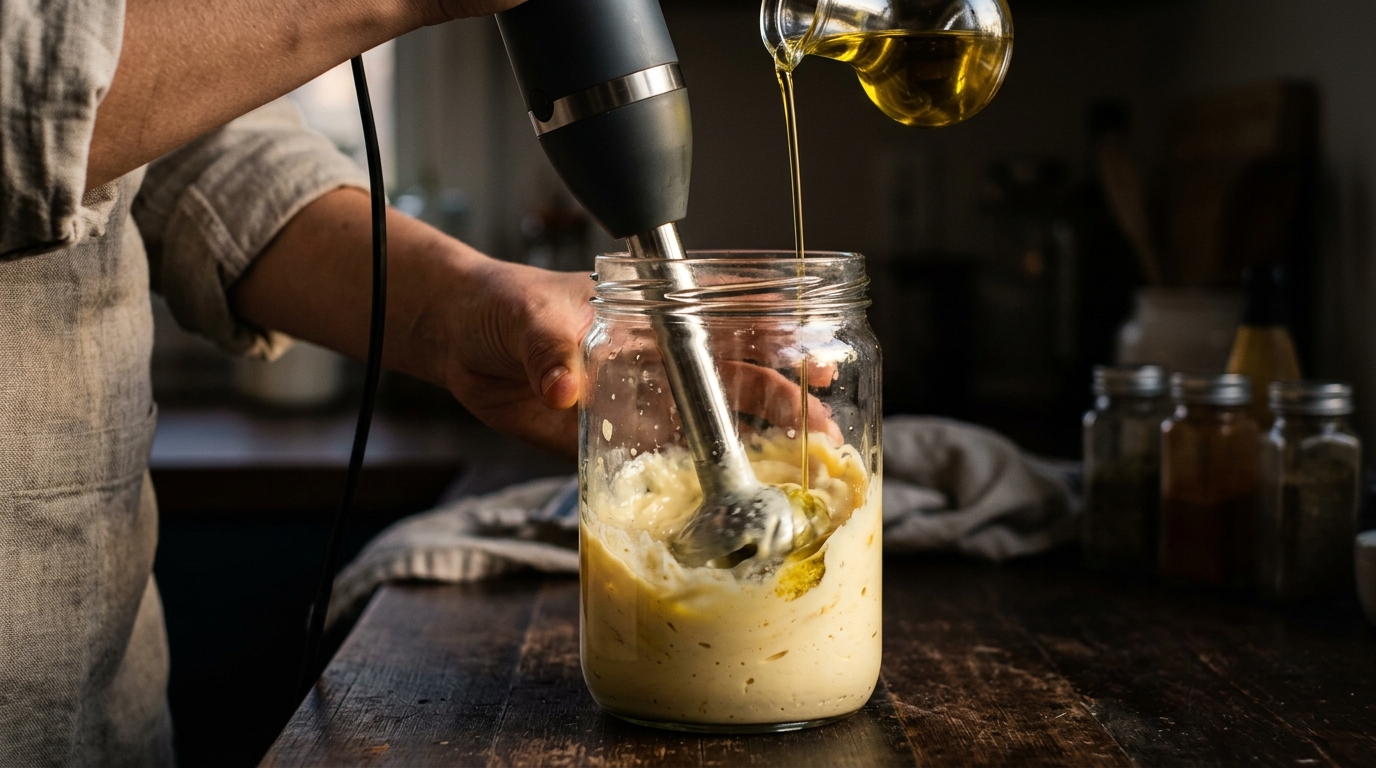
The greatest lie the food industry ever told was that mayo is hard to make. It is not hard. It is aggressively, almost insultingly simple. You need five ingredients and either a whisk with conviction or an immersion blender with a pulse button.
Ingredients:
- 1 large egg yolk, room temperature
- 1 tablespoon Dijon mustard (also an emulsifier — you're double-wrapping those oil droplets)
- 1 tablespoon lemon juice or white wine vinegar
- 3/4 cup neutral oil (grapeseed, avocado, or light olive oil — save the extra virgin for finishing)
- 1/4 teaspoon fine salt
Whisk Method:
- Combine egg yolk, mustard, lemon juice, and salt in a medium bowl.
- Whisk until smooth and slightly thickened, about 30 seconds.
- Start adding oil one drop at a time while whisking constantly. I mean one. Drop. At. A. Time. This is not a suggestion. This is the difference between mayo and sadness soup.
- After about a quarter of the oil is in and the mixture looks thick and creamy, you can increase to a very thin, steady stream. Keep whisking.
- Continue until all the oil is incorporated. You'll have about a cup of thick, glossy, magnificent homemade mayo.
Immersion Blender Method (The Lazy Genius Way):
- Put everything — egg yolk, mustard, acid, salt, and ALL the oil — into a tall, narrow container (the cup that came with your immersion blender is perfect).
- Insert the immersion blender all the way to the bottom.
- Turn it on and hold it at the bottom for 15 seconds without moving.
- Slowly — slowly — pull it upward over another 15 seconds.
- You now have mayo. Total elapsed time: 30 seconds. You absolute legend.
Homemade mayo lasts about a week in the fridge. It uses raw egg yolk, so use fresh, high-quality eggs. If that makes you nervous, pasteurized eggs work identically.
Why it tastes better than jarred: Commercial mayo uses whole eggs (not just yolks) and soybean oil, then gets stabilized with modified food starch, calcium disodium EDTA, and whatever else keeps it shelf-stable for eight months in a warehouse. Your version uses more yolk (richer), better oil (cleaner flavor), and actual acid (brighter). It's like comparing a tailored suit to a hospital gown.
Aioli Is Not Garlic Mayo (Except When It Is)
This is where I lose friends.
Traditional aioli — the real Provençal stuff from southern France and Catalonia — contains no egg. Zero. It's raw garlic pounded in a mortar with salt until it becomes a paste, then olive oil is drizzled in while you pound and stir until it emulsifies into a thick, pungent, garlic-forward sauce. The garlic itself acts as the emulsifier. It is punishingly labor-intensive, aggressively garlicky, and one of the most delicious things humans have ever invented.
Modern "aioli" — the stuff on every restaurant menu from Portland to Perth — is mayo with garlic mixed in. That's it. It's garlic mayo. And every chef who puts "lemon aioli" or "sriracha aioli" on their menu knows damn well it's flavored mayo, but "aioli" sounds $4 more expensive.
Am I mad about it? Honestly, no. Language evolves. The word "aioli" has functionally come to mean "fancy flavored mayo" in English, and fighting that is like fighting the tide. But you should know the difference, because if you ever meet someone from Provence and call garlic mayo "aioli," they will look at you like you just microwaved a croissant.
The practical takeaway: If a recipe calls for "aioli," it almost certainly means garlic mayo. Make your mayo, crush 2-3 raw garlic cloves into a paste with the flat of your knife and some salt, fold it in, and congratulations — you just made $14 worth of restaurant sauce for about forty cents.
Mayo vs. Miracle Whip: The Cold War Nobody Asked For
Let me settle this with the respect both sides deserve.
Mayonnaise is an emulsion of oil, egg yolk, and acid. Period. It's rich, fatty, tangy, and smooth. It tastes like ingredients.
Miracle Whip is a "dressing" (Kraft's own word — they can't legally call it mayo) that contains the same base but adds sugar, paprika, and garlic powder. It's sweeter, tangier, spicier, and has a distinctive twang that you either grew up with and love or encountered as an adult and found deeply unsettling.
Neither is objectively wrong. But they are absolutely not interchangeable, and treating them as such is how you end up with sweet potato salad and a table full of confused Midwesterners.
Miracle Whip is excellent on a simple sandwich — bologna, white bread, a leaf of iceberg lettuce, eaten over the sink at 11 PM while questioning your life choices. That's its home. That's where it thrives.
Mayo is what you use when you're building something that the fat and richness need to carry — a proper chicken salad, a slaw, a dipping sauce, a cake (yes, cake — we're getting there).
The real answer is to keep both in your fridge and stop making it a personality trait. You're not brave for hating one of them.
Seven Things You Should Be Doing with Mayo (But Aren't)
This is where the mayo-hesitant crowd either converts or leaves, and I'm fine with either outcome.
1. Searing steaks and fish. Brush a thin layer of mayo on your protein before it hits the pan. The oil in the mayo gives you a perfectly even fat coating (no pooling like butter or oil), the proteins in the egg yolk accelerate the Maillard reaction, and the result is the most aggressive, restaurant-quality sear you've ever produced at home. It adds zero mayo flavor. I know that sounds like a lie. It is not a lie.
2. Grilled cheese. Mayo on the outside of the bread instead of butter. Higher smoke point, more even browning, tangier crust. This is not new information but I will keep shouting it until every household complies.
3. Chocolate cake. Duke's mayo chocolate cake is a Southern institution. The mayo replaces oil and eggs in the batter — because mayo is oil and eggs — and adds a richness and moisture that makes people ask for your recipe and then get angry when you tell them. Two tablespoons per layer. Trust the process.
4. Roasted vegetables. Toss your broccoli, cauliflower, or Brussels sprouts in a couple tablespoons of mayo before roasting at 425°F. Same principle as the steak sear — the egg proteins brown beautifully, the oil distributes evenly, and you get caramelized, crispy edges that plain olive oil cannot match. Season after tossing. Thank me after eating.
5. Flavored compound mayos. This is where the doors blow off. Start with your homemade base and fold in:
- Miso + lime juice = umami bomb for grain bowls and grilled fish
- Chipotle in adobo + honey = smoky-sweet sauce for tacos and fried chicken sandwiches
- Gochujang + sesame oil + rice vinegar = Korean-inspired heat for burgers and bibimbap
- Roasted garlic + herbs + anchovy paste = a sauce so good you'll eat it with a spoon and lie about it
- Curry powder + mango chutney = coronation chicken filling that makes the British weep with joy
6. Pizza crust. Brush mayo on your pizza dough before the sauce goes on. Creates a moisture barrier that prevents soggy crust and adds a subtle richness to every bite. Every New Haven pizzeria that won't share their "secret" is doing something like this. I have no proof. I have no doubt.
7. Scrambled eggs. A tablespoon of mayo whisked into three beaten eggs before they hit the pan. The extra fat and emulsified egg yolk produces the creamiest, most custardy scrambled eggs you've ever made. Jacques Pépin would nod approvingly. Maybe. I don't actually know Jacques Pépin. But I choose to believe he'd nod.
The Verdict
Chef's NoteMayo isn't a condiment. It's a platform. It's the blank canvas that separates people who cook from people who assemble. If you've been treating it like flavorless paste from a plastic squeeze bottle, you haven't met mayo — you've met its mugshot. Make it once from scratch. Put it on a steak. Fold gochujang into it at midnight. You'll never go back to being a mayo hater, and frankly, the world doesn't need any more of those.
Now go emulsify something. Your whisk arm isn't going to develop itself.